
10 Common Causes of Irregular Periods Every Woman Should Know
Are your periods arriving late, early, or sometimes not showing up at all? You're not alone. Millions of women experience irregular periods at some point in their lives. While an occasional change in your menstrual cycle may not be a cause for concern, frequent irregularities can signal underlying health issues that deserve attention.
Understanding what causes irregular periods can help you take control of your health, balance your hormones, and feel your best. Let's explore the most common reasons your cycle may be unpredictable.
What Are Irregular Periods?
A typical menstrual cycle lasts between 21 and 35 days, with most women experiencing periods every 28 days. If your cycle is consistently shorter, longer, unpredictable, or you frequently skip periods, you may be dealing with irregular menstruation.
Common signs of irregular periods include:
Missing periods
Periods arriving too early or too late
Unusually heavy bleeding
Very light periods
Spotting between periods
Cycles that vary significantly month to month
1. Hormonal Imbalance
Hormones are the body's chemical messengers, and they play a crucial role in regulating your menstrual cycle. When hormones such as estrogen and progesterone become imbalanced, your periods may become irregular.
Common signs:
Mood swings
Acne
Weight fluctuations
Fatigue
Sleep problems
Maintaining a healthy lifestyle, getting quality sleep, and managing stress can help support hormonal balance naturally.
2. Polycystic Ovary Syndrome (PCOS)
Polycystic Ovary Syndrome is one of the most common causes of irregular periods among women of reproductive age.
PCOS can interfere with ovulation, causing missed or infrequent periods. Other symptoms may include:
Weight gain
Excess facial hair
Acne
Difficulty getting pregnant
Hair thinning
Early diagnosis and lifestyle changes can significantly improve symptoms and overall health.
3. Excessive Stress
Stress doesn't just affect your mood—it can affect your menstrual cycle too.
When you're under chronic stress, your body produces higher levels of cortisol, often called the "stress hormone." Elevated cortisol can interfere with reproductive hormones and delay ovulation.
Stress-related symptoms:
Late periods
Missed periods
Sleep disturbances
Anxiety
Low energy
Simple practices like meditation, exercise, journaling, and better sleep habits can make a big difference.
4. Significant Weight Gain or Weight Loss
Your body needs a healthy amount of body fat to produce reproductive hormones properly.
Rapid weight loss may result from:
Extreme dieting
Over-exercising
Eating disorders
Excess weight may contribute to:
Estrogen imbalances
Insulin resistance
PCOS symptoms
Maintaining a healthy weight often helps restore regular menstrual cycles.
5. Poor Sleep Quality
Many women underestimate the impact sleep has on hormone health.
Sleep helps regulate important hormones that influence ovulation and menstruation. Chronic sleep deprivation may contribute to hormonal imbalances and irregular cycles.
Signs poor sleep may be affecting your health:
Constant fatigue
Difficulty concentrating
Mood changes
Increased cravings
Irregular periods
Improving sleep quality can support overall hormonal wellness.
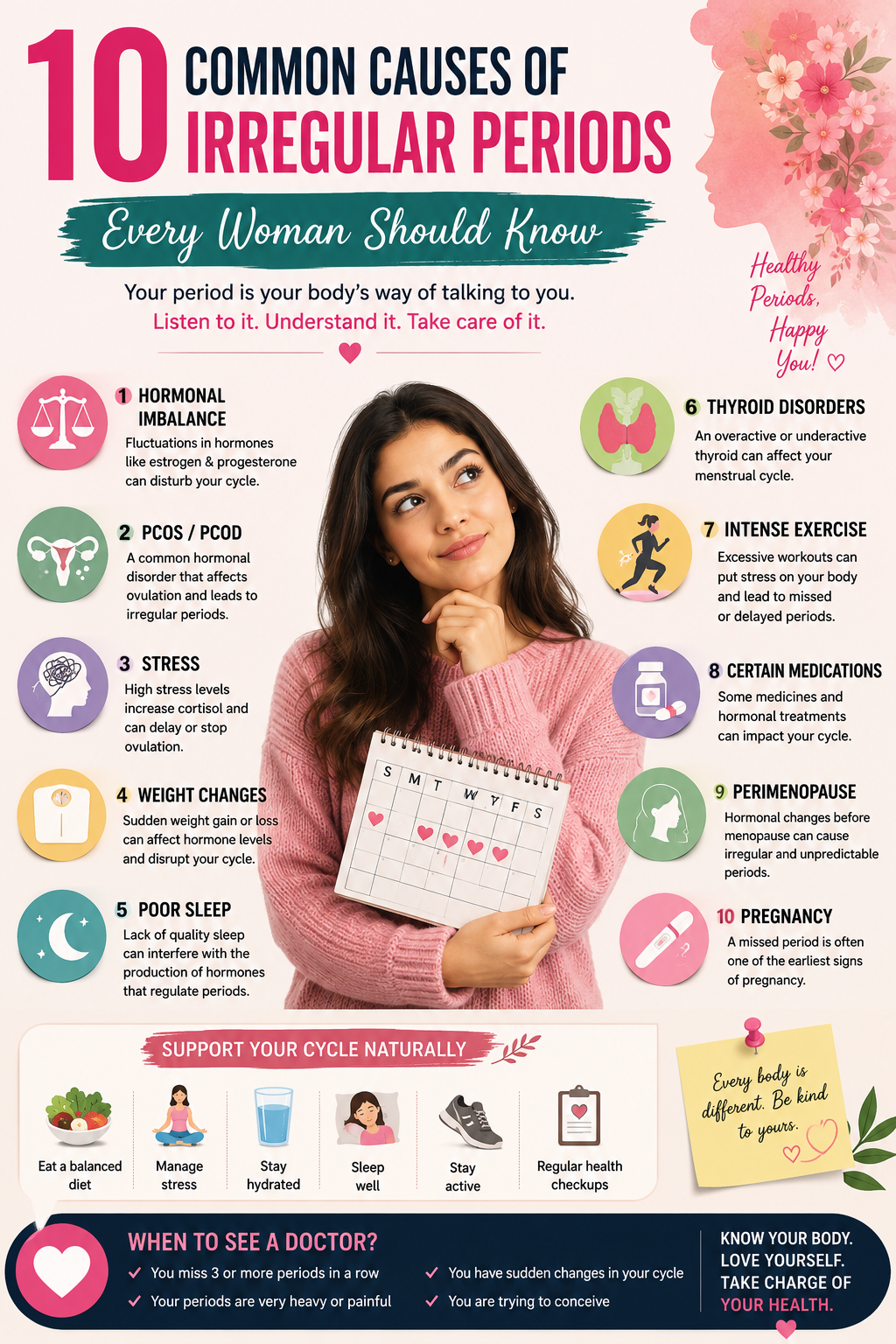
6. Thyroid Disorders
Your thyroid gland controls many important bodily functions, including metabolism and hormone regulation.
Both an underactive thyroid (hypothyroidism) and an overactive thyroid (hyperthyroidism) can cause menstrual irregularities.
Common symptoms:
Fatigue
Weight changes
Hair loss
Sensitivity to temperature
Irregular periods
If you suspect thyroid issues, consult a healthcare professional for proper testing.
7. Intense Exercise
Exercise is excellent for overall health, but excessive physical activity can sometimes disrupt the menstrual cycle.
Athletes and women who engage in high-intensity training may experience:
Missed periods
Delayed ovulation
Hormonal changes
The body may perceive excessive exercise as a form of physical stress, affecting reproductive function.
8. Certain Medications
Some medications can influence hormone levels and menstrual cycles.
Examples include:
Hormonal birth control
Antidepressants
Blood thinners
Certain hormone therapies
If you notice cycle changes after starting a new medication, speak with your healthcare provider.
9. Perimenopause
Women approaching menopause often experience changes in their menstrual cycle.
Perimenopause can begin several years before menopause and may cause:
Irregular periods
Hot flashes
Mood changes
Sleep problems
Night sweats
These changes are a natural part of aging but can still impact quality of life.
10. Pregnancy
A missed period is often one of the earliest signs of pregnancy.
Other symptoms may include:
Nausea
Breast tenderness
Fatigue
Increased urination
If you've missed a period and pregnancy is possible, consider taking a pregnancy test.
How to Support a Healthy Menstrual Cycle Naturally
✅ Prioritize quality sleep
✅ Eat a nutrient-rich diet
✅ Manage daily stress
✅ Stay physically active
✅ Maintain a healthy weight
✅ Stay hydrated
✅ Limit excessive caffeine and alcohol
✅ Schedule regular health checkups
Frequently Asked Questions (FAQs)
Can stress really cause irregular periods?
Yes. Chronic stress can disrupt hormone production and interfere with ovulation, leading to delayed or missed periods.
Are irregular periods always a sign of PCOS?
No. PCOS is one possible cause, but irregular periods can also result from stress, thyroid issues, weight changes, pregnancy, and other factors.
Can sleep affect my menstrual cycle?
Yes. Poor sleep may contribute to hormonal imbalances that can affect cycle regularity.
What foods help regulate periods naturally?
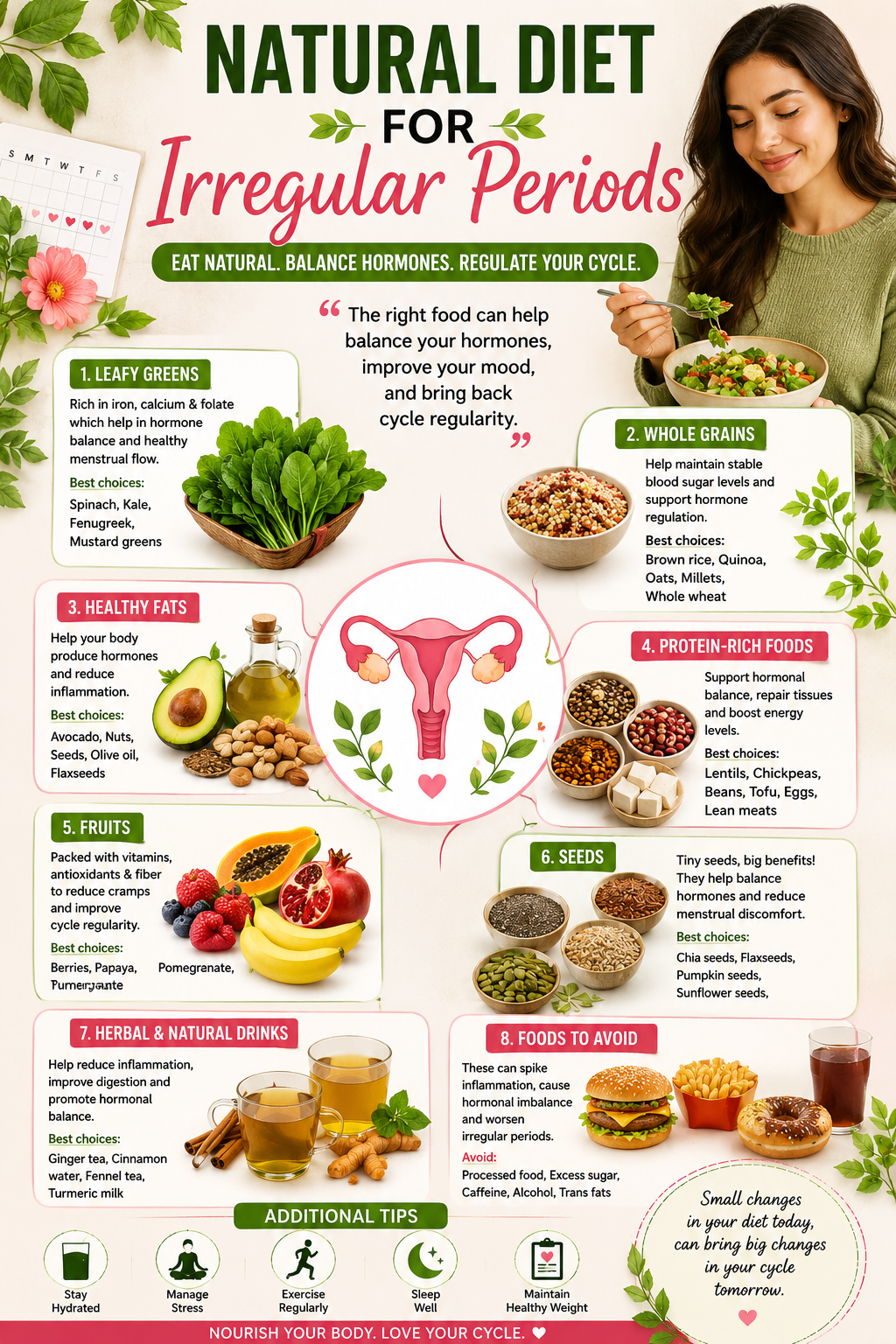
A balanced diet rich in fruits, vegetables, healthy fats, lean proteins, and whole grains can support hormonal health and menstrual regularity.
Can irregular periods affect fertility?
Depending on the cause, irregular ovulation may make conception more difficult. Consulting a healthcare professional can help identify appropriate treatment options.
Natural Diet For Irregular periods
Final Thoughts
Irregular periods are common, but they shouldn't be ignored. Your menstrual cycle provides valuable insights into your overall health and hormonal balance. By understanding the potential causes—from stress and poor sleep to PCOS and thyroid disorders—you can take proactive steps toward better well-being.
Remember: your body is always communicating with you. Paying attention to changes in your cycle is one of the most powerful ways to support your long-term health.