
Is Your Body Trying to Tell You Something?
Have you been feeling tired all the time, struggling with weight gain, experiencing mood swings, or noticing changes in your skin and hair?You might think it's stress, lack of sleep, or simply a busy lifestyle. But sometimes, the real culprit is something deeper: hormonal imbalance.
Hormones are your body's chemical messengers. They control everything from your mood and metabolism to your sleep, skin, fertility, and energy levels. When hormones become imbalanced, your body often sends warning signs.The problem?Many women ignore these signs until they begin affecting their daily life.Let's uncover the 10 most common signs of hormonal imbalance and what you can do to regain control of your health.
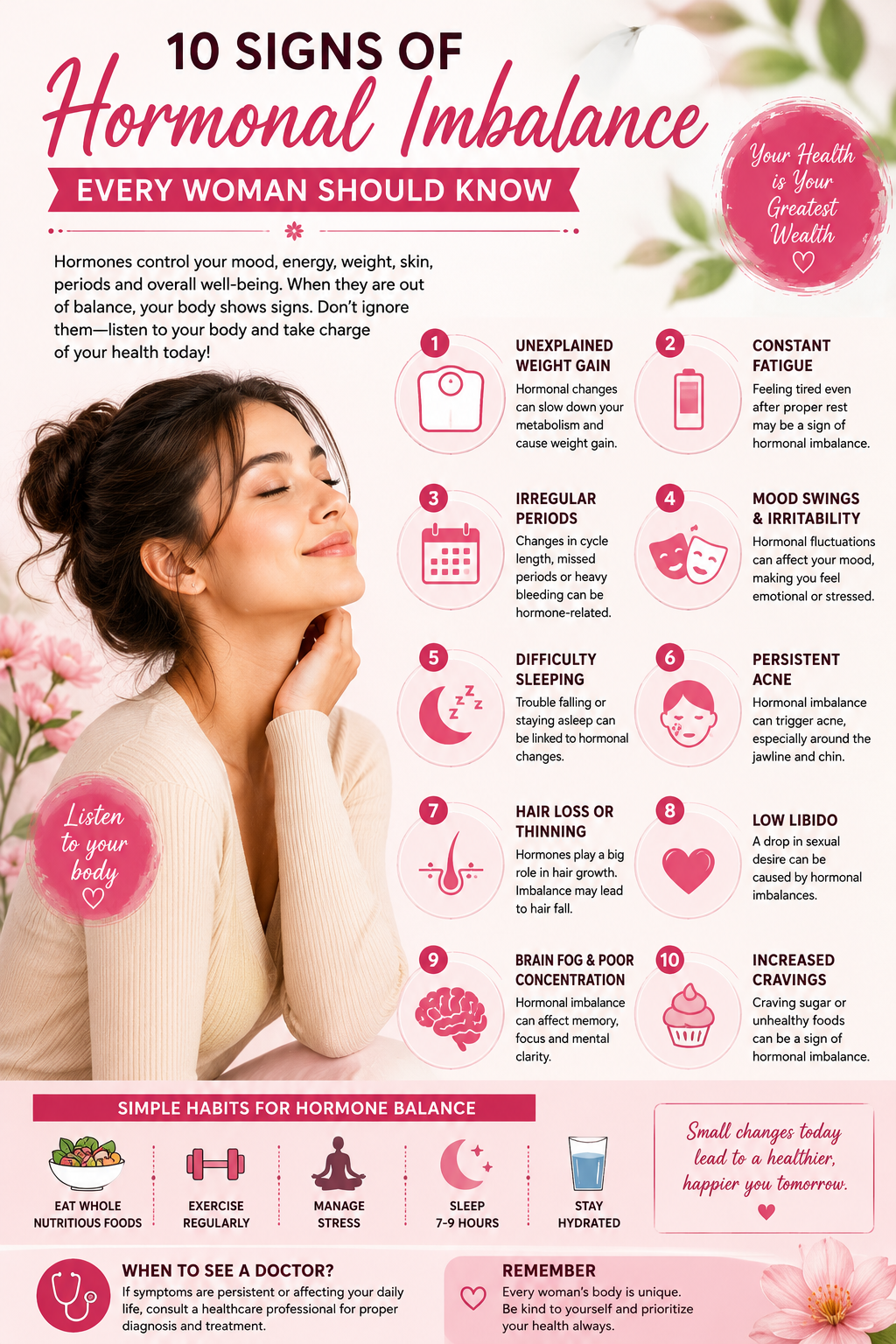
What Is Hormonal Imbalance?
Hormonal imbalance occurs when there is too much or too little of certain hormones in your bloodstream.
Common hormones that affect women's health include:
1. Estrogen
2. Progesterone
3. Insulin
4. Cortisol
5. Thyroid hormones
6. Testosterone
Even a small imbalance can have a significant impact on your overall well-being.
1. Unexplained Weight Gain
The Sign
You're eating the same foods and maintaining the same routine, yet the number on the scale keeps increasing.
Why It Happens
Hormonal changes involving insulin, thyroid hormones, cortisol, and estrogen can make it harder for your body to burn calories efficiently.
What You Can Do
Increase protein intake
Reduce processed sugar
Strength train regularly
Get quality sleep.
2. Constant Fatigue
The Sign
You wake up tired even after a full night's sleep.
Why It Happens
Low thyroid hormones, high cortisol levels, and estrogen imbalances can drain your energy levels.
What You Can Do
1. Improve sleep quality
2. Eat iron-rich foods
3. Stay hydrated
4. Manage stress effectively
3. Irregular Periods
The Sign
Your menstrual cycle becomes unpredictable.
Why It Happens
Estrogen and progesterone imbalances often disrupt normal menstrual cycles.
What You Can Do
1. Track your cycle
2. Maintain a healthy weight
3. Consult a healthcare professional if irregularities persist
4. Mood Swings and Irritability
The Sign
You feel emotional, anxious, or irritable without any obvious reason.
Why It Happens
Hormones influence brain chemicals that regulate mood.
What You Can Do
1. Exercise regularly
2. Practice meditation
3. Limit caffeine
4. Prioritize sleep
5. Difficulty Sleeping
The Sign
You struggle to fall asleep or frequently wake during the night.
Why It Happens
Progesterone and cortisol play major roles in sleep regulation.
What You Can Do
1. Avoid screens before bedtime
2. Create a relaxing nighttime
3. routine Keep a consistent sleep schedule
6. Persistent Acne
The Sign
Breakouts continue long after your teenage years.
Why It Happens
Excess androgen hormones can increase oil production, leading to acne.
What You Can Do
1. Reduce high-sugar foods
2. Stay hydrated
3. Follow a gentle skincare routine
7. Hair Loss or Hair Thinning
The Sign
You notice more hair falling out than usual.
Why It Happens
Thyroid issues, low estrogen, and elevated androgens can contribute to hair loss.
What You Can Do
1. Eat protein-rich foods
2. Check iron and vitamin levels
3. Manage stress
8. Low Libido
The Sign
Your interest in intimacy decreases significantly.
Why It Happens
Estrogen, testosterone, and stress hormones all influence sexual desire.
What You Can Do
1. Improve sleep quality
2. Reduce stress
3. Focus on overall health and fitness
9. Brain Fog and Poor Concentration
The Sign
You find it difficult to focus, remember things, or stay mentally sharp.
Why It Happens
Hormonal fluctuations can affect cognitive function and memory.
What You Can Do
1. Eat omega-3-rich foods
2. Stay physically active
3. Get sufficient sleep
10. Increased Cravings
The Sign
You constantly crave sugary or unhealthy foods.
Why It Happens
Insulin imbalance and stress hormones can increase hunger and cravings.
What You Can Do
1. Eat balanced meals
2. Include protein and fiber
3. Avoid skipping meals
Who Is Most at Risk?
Women may experience hormonal imbalances during:
1. Puberty
2. Pregnancy
3. After childbirth
4. Perimenopause
5. Menopause
Conditions such as PCOS and thyroid disorders can also affect hormone levels.
Final Thoughts
Hormonal imbalance doesn't happen overnight, and it often starts with subtle warning signs.
Your body is constantly communicating with you through your energy levels, mood, skin, sleep, and menstrual cycle.
The sooner you recognize these signs, the sooner you can take steps toward better health.
Remember:
Your symptoms are not something to ignore.
Your health deserves attention.
Small lifestyle changes today can lead to a healthier, happier future.